Embassy of the Islamic Republic of Afghanistan Canberra - Commonwealth Australia
We use cookies to ensure that we give you the best experience on our website.
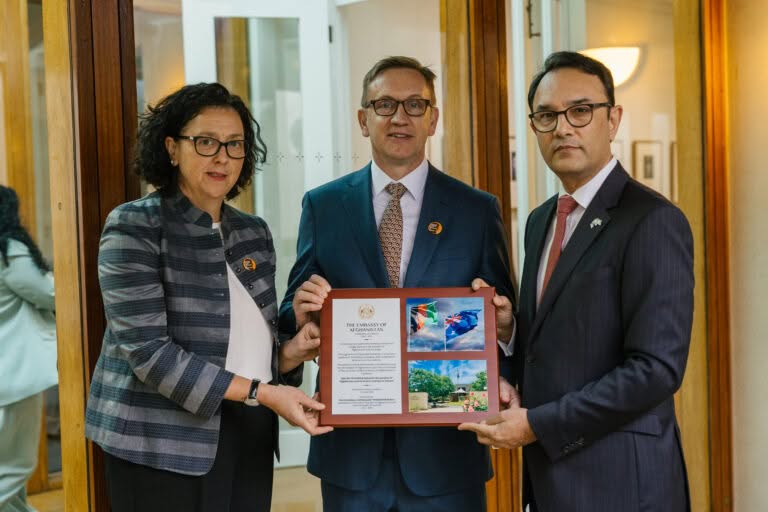
اطلاعیه نظر به تصمیم کشور میزبان، سفارت جمهوری اسلامی افغانستان در کنبرا و غیرمقیم برای نیوزیلند و فیجی مسدود گردیده و تمامی خدمات قونسلی و سایر خدمات رسمی آن متوقف شده است خبرتیا د کوربه هېواد د پرېکړې له مخې، په کانبرا کې د افغانستان د اسلامي جمهوریت سفارت، چې د نیوزیلنډ او فیجي لپاره هم غیرمقیم سفارت و، تړل شوی او ټول قونسلي او نور رسمي خدمتونه یې بند شوي دي
Australia and Afghanistan share a friendly and long-standing relationship. Relations can be traced back as far as the 1860s when Afghan cameleers came to Australia. In fact, 2020 marks the 160th anniversary of the arrival of these cameleers. The history and contribution of these cameleers and their descendants will be celebrated by the Embassy of Afghanistan in Canberra this year, with a special month of recognition from 15th June to 15th July. This will feature exclusive interviews with academics, as well as with descendants of the cameleers and Islamic-Indigenous communities. The Embassy looks forward to joining with these extraordinary individuals to shed more light on their ancestors.
From the late 1800s, as many as 20,000 camels and 2000 cameleers were contracted by European settlers for their invaluable knowledge of navigating semi-arid regions of the continent; with the Burke and Wills expedition of 1860-61 marking the first of such occasion. Not only did they contribute to the carriage of explorers, they also provided valuable assistance in transportation for the wool and mining industry, as well as major infrastructure projects including the Overland Telegraph Line; the Queensland Border Fence; the Transcontinental Railway; the Rabbit Proof Fence, and; the Canning Stock Route.
Upon their arrival, the cameleers were also the first to introduce the Islamic faith in Australia. They continued to wear their traditional clothing and adhered to their Muslim religion and devout practices – constructing rural Ghantowns as key focal points for the segregated communities. At first, these settlements were simply camel camps which provided shelter to Cameleers as they arrived or left for expeditions. Overtime, they would expand to incorporate more elements from their homeland including mosques, religious education, halal butchers, vegetable gardens and date groves. By 1888, rural Ghantowns had expanded into urban communities. The first metropolitan mosque in Australia was built on Adelaide’s Little Gilbert Street and became a national site of congregation for members during the fast of Ramadan.
During their inland travels, several cameleers formed a kinship with Indigenous Australians. Some agreed to carry traditional goods such as red ochre and the pituri plant across ancient trade routes; while others introduced sugar, tea, tobacco, clothing and metal tools to remote communities. In exchange, Indigenous Australians incorporated camel hair in their traditional artefacts and agreed to work with the cameleers during long desert treks by providing local information on water sources and plant material.
During the 1920s, as Australian transport motorised, the demand for Cameleer services fell sharply. Within the space of 20 years, several Ghantowns decayed beyond recognition and were deserted. By the 1940s, the last of the cameleers had all but disappeared from inland roads and tracks. When there was no longer a need for their services, most Cameleers returned to their homes in Afghanistan. Those who decided to call Australia home married either into Indigenous or European communities – their offspring growing up under the Islamic faith. But as older Cameleers passed away, younger generations began to integrate more fully with Australian society and the memory of their contribution faded away.
Today, several remnants of the Afghan Cameleers have been left behind. The kinship between the Cameleers and the Indigenous remains strong, with 1,140 Aboriginal and Torres Strait Islander Australians identifying themselves as Islamic-Indigenous – and the train between Adelaide and Darwin, The Ghan, has been named in their honour. A number of these proud descendants remain who are working hard to keep this legacy alive, and the Embassy is proud to share their stories as part of the 160th Anniversary celebrations.
We wish to invite you to join us in learning, sharing, and celebrating this important part of Australian history and the long and rich Afghan-Australian relationship throughout this month. We also request your ongoing support and interest into the future, as we introduce an Afghan Cameleer Heritage Week to be celebrated every year moving forward.